

Fresh flowers look beautiful, but they don't always last long enough to feel worth the effort for everyday styling.
These paper flower decoration ideas for home styling focus on simple handmade designs that bring colour, texture, and softness into your space without needing constant replacement.
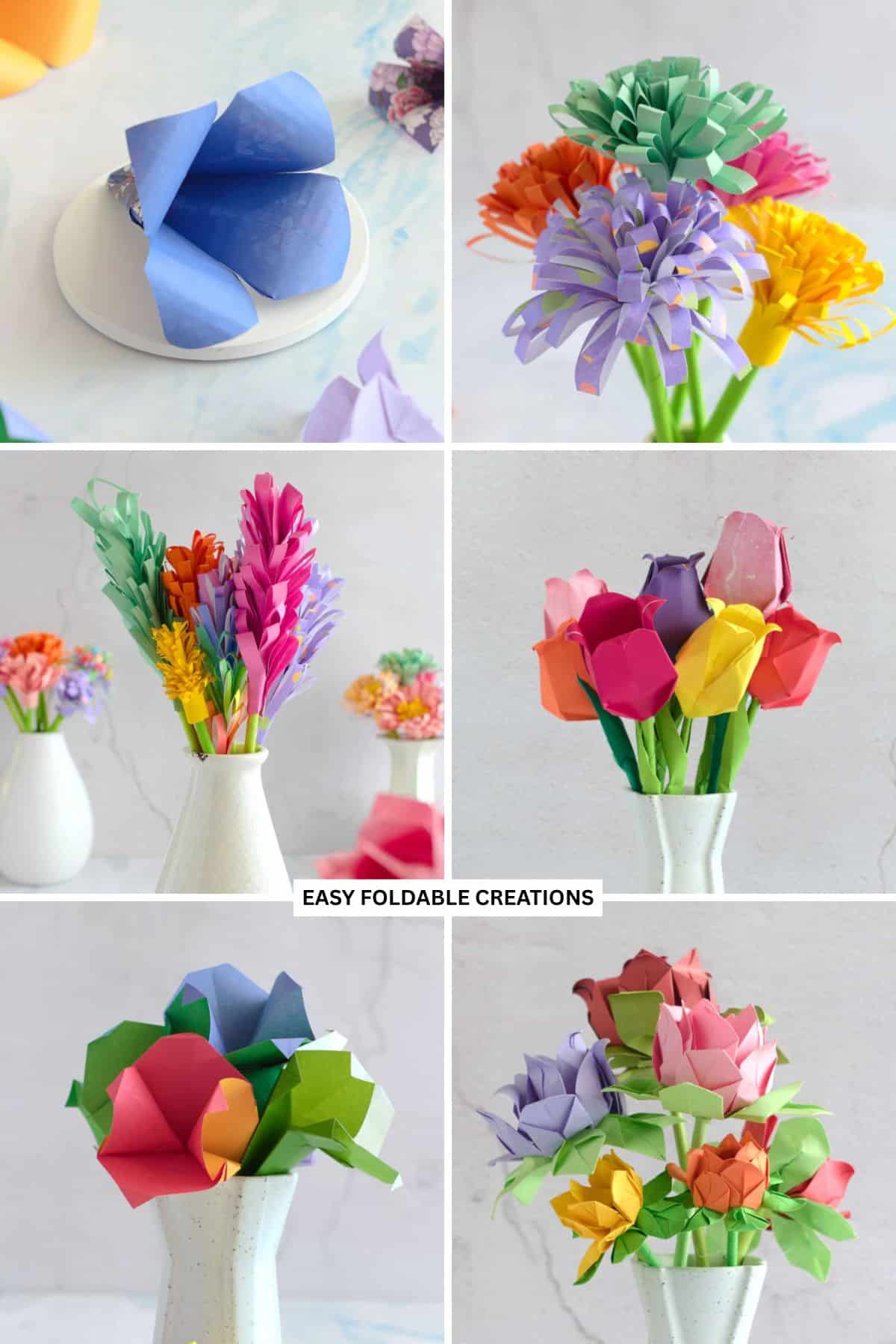
Table of Contents
- Simple paper flower display ideas for shelves, tables, and walls
- How to style paper flowers so they feel natural in your home
- Seasonal styling with paper flowers for spring, summer, fall, and winter
- Spring paper flower styling
- Summer paper flower styling (bright, bold, more contrast)
- Fall paper flower styling (warm, muted, layered tones)
- Winter paper flower styling (minimal, clean, structured)
- How to reuse and store paper flowers across seasons
- FAQ
- Stay Connected
- Other Paper Crafts You Might Like To Try
- Comments
Home styling often comes down to small details that make a space feel finished rather than empty. Flowers are one of the easiest ways to add warmth, but real arrangements fade quickly and can feel expensive to maintain regularly.
Paper flowers solve that problem by giving you something decorative that holds its shape and can be styled in different areas of the home without any upkeep.
They can be soft and subtle or bold and sculptural depending on how they're made and displayed.
These paper flower decoration ideas for home styling focus on simple, creative ways to bring handmade floral details into everyday spaces, whether you're decorating shelves, tables, or wall areas.
If you enjoy coordinating paper elements across different projects, paper flowers and bouquets ideas also offer more ways to build larger floral arrangements from simple shapes.
Simple paper flower display ideas for shelves, tables, and walls
Paper flowers work best when you think about where they naturally sit in a room rather than treating them like a single decoration piece. The same flower can feel completely different depending on whether it's placed on a shelf, grouped on a table, or used as wall styling.
On shelves, small clusters tend to work better than single stems. A few paper flowers tucked between books, jars, or framed prints can soften harder edges and add colour without taking over the space.
Mixing heights slightly helps them feel more natural, especially when they sit alongside everyday objects rather than being displayed on their own. For tables, low arrangements usually feel the most balanced.
A small cluster of paper flowers in a simple jar, cup, or ceramic container can act as a soft centrepiece without blocking sightlines.
This works especially well for dining tables or coffee tables where you still want the space to feel open and usable.

Walls give you more freedom to treat paper flowers as a feature rather than an accent.
A small grouped arrangement above a desk, mirror, or sideboard can create a focal point without needing large artwork. Keeping the flowers in a loose cluster rather than a strict shape helps them feel lighter and less rigid against the wall.
These placement ideas work because they focus on how paper flowers interact with everyday objects in the home, rather than treating them as standalone decorations.
How to style paper flowers so they feel natural in your home
Paper flowers tend to look best when they don't feel "placed" too deliberately. Instead of treating them like a display piece, it helps to think about how they blend into the everyday surfaces already in your home.
On shelves, they work well when they're mixed into existing objects rather than sitting on their own.
Tucking a few stems between books, small jars, or framed photos helps them feel like part of the space instead of a separate decoration. The key is keeping them slightly uneven in height so they don't look too staged.
On tables, especially coffee or side tables, smaller groupings usually feel more balanced.
A simple jar or low container with a few paper stems can soften hard surfaces without becoming the centre of attention.
This works best when the colours stay close to what's already in the room so nothing feels visually disconnected.

On flat surfaces like desks or dressers, even a single paper flower can be enough.
One well-made shape placed in a simple container often feels more intentional than a larger arrangement, especially in smaller rooms where space is limited.
Across all of these placements, the goal isn't to create a full display in every corner, but to let the paper flowers appear naturally in small pockets throughout the home.
That's what keeps them feeling like part of the environment rather than separate decor added on top.
Seasonal styling with paper flowers for spring, summer, fall, and winter
Paper flowers are especially useful for home styling because you can shift their mood with the seasons just by changing colour, grouping, and placement, without needing to remake everything from scratch.
Spring paper flower styling
Spring works best with soft, open styling that doesn't feel too structured. Think small clusters placed loosely around the home, almost like they've been naturally gathered rather than arranged.
Pale tones like blush, soft yellow, and light green help create that fresh seasonal feel. Simple shapes such as paper tulips, paper roses, or delicate blossoms work well here because they already carry that light, early-season look without needing extra detail.
Instead of creating large arrangements, smaller groupings on windowsills, bedside tables, or kitchen shelves tend to feel more natural for spring.

Summer paper flower styling (bright, bold, more contrast)
Summer allows for stronger colour and fuller arrangements. This is the season where paper flowers can feel more expressive without looking out of place.
Warm, saturated tones like coral, sunflower yellow, and soft orange work well in brighter rooms. You can also lean into fuller designs like simple paper flower shapes grouped together to create a stronger visual focal point.
These arrangements work especially well on dining tables, sideboards, or entryway surfaces where a bit more energy feels appropriate.

Fall paper flower styling (warm, muted, layered tones)
Fall styling moves toward deeper, muted colours and a more grounded feel. Instead of airy spacing, arrangements often work better when flowers are grouped a little closer together.
Tones like burnt orange, dusty rose, warm cream, and soft brown help create that seasonal warmth without feeling heavy.
Layering different shades of the same colour also adds depth without needing complicated designs.
This is where fuller arrangements like this DIY paper flower bouquet can be especially useful, since they naturally support more layered, textured styling for mantels, coffee tables, or entry consoles.

Winter paper flower styling (minimal, clean, structured)
Winter styling tends to feel more minimal and controlled, with an emphasis on shape rather than variety. Simple white, soft grey, and cool-toned flowers help keep things calm and uncluttered.
Smaller, intentional placements often work better than large arrangements. A few carefully placed stems or a simple cluster of paper flowers can feel more refined when kept restrained.
This approach works well in quieter spaces where you want a subtle seasonal touch without adding visual weight.

How to reuse and store paper flowers across seasons
One of the biggest advantages of paper flowers is that you don't have to treat them as one-season decor. With a little care, they can be stored, reshuffled, and reused in completely different ways throughout the year.
If you're packing them away between seasons, the main goal is to protect their shape. Keeping them in a shallow box where they aren't crushed works best. Layering them with tissue paper helps prevent petals from bending or flattening, especially for more detailed designs.
When it's time to bring them back out, you don't always need to use them in the same way.
A group that was styled on a dining table in summer might feel completely different on a bedroom shelf in winter. Even small changes in placement can make them feel new again without needing to remake anything.
It also helps to rotate arrangements rather than using everything at once.
A few stems from a larger set of paper flowers can be enough to refresh a space, especially when you're mixing them with other simple paper decor around the home.
Because they don't wilt or lose colour, paper flowers are more about reuse and reshaping than replacement, which makes them easy to build into long-term home styling rather than temporary decoration.

FAQ
Shelves, coffee tables, bedside tables, and entryway consoles all work well. Smaller clusters tend to suit tighter spaces, while larger groupings work better in open areas.
Yes, especially when kept simple. Neutral tones or single-color arrangements fit well into modern interiors without feeling overly decorative.
Softer edges, layered petals, and natural color variations help them feel less rigid. Keeping arrangements slightly uneven also makes them feel more organic.
Yes, they can be reused across seasons by changing how they're grouped or where they're placed in the home. They don't need to be replaced like fresh flowers.
Light cardstock or craft paper usually works best because it holds shape without being too stiff, making it easier to style in different arrangements.
Stay Connected
Made this pattern? Let us know how it went in the comments below!
Pin this post - Pin now to take your paper crafting skills to the next level.
Share on Instagram or Facebook - Capture the beauty of your finished paper craft project and share it on Instagram or Facebook! Tag us @easyfoldablecreations so we can see your work!


Comments
No Comments